Content warning
This article discusses depression and suicide in detail, including the planning that preceded the death and the late-stage signs that surrounded it. It is written carefully but it does not soften these subjects.
Support and a note on fiction
If you are presently in crisis, please reach out to a mental health professional, a crisis line in your country, or someone you trust before continuing. Nothing in this article is intended as a substitute for that help.
Like every page on this wiki, the article is fiction set within the lore of Landfall. The character is played by a real person; the player is not the character. Acts and patterns described here are not statements about the values, views, or real-life behavior of the player behind the role.
The death of Edward Redcliffe late in Landfall-530 - Noble Blood was a suicide, planned over months and concealed from nearly everyone who might have intervened. This entry sets out the surrounding events plainly. It is included in the public record at this length separately, rather than left as a single line on Edward’s bio page.
Old Yotem and the Final Year
Late in the epoch the Ehrengard Empire pushed Edward to commit himself fully to the development of his duchy of Old Yotem, reducing the share of his time he could spend at the Casino. He relocated south accordingly. Veltic Veltol, having spent his apprenticeship years under Edward’s mentorship in New Terranova, chose to follow him rather than remain behind.
From Old Yotem Edward began handing the Red Corporation over to Vetis in stages. Ownership of the Red Diamond Casino passed first; further assets followed across the months after, until the entire holding was Vetis’s outright. At the time the transfers were read as the careful succession of an aging proprietor preparing to retire from commercial life. In hindsight they were the methodical closing of accounts of a man preparing to die.
By his own later admission, recorded in letters Avery R. Ehrveil preserved, Edward had been carrying a deep and unspoken depression for several years before the end. It had set in slowly. He had concealed it from nearly everyone. Those closest to him noted only a steady quietening in his last months: fewer public appearances, fewer letters, less of the well-timed warmth that had been a hallmark of his presence. He gave away small possessions to friends with a sudden and uncharacteristic generosity. He paid old debts no one had asked him to settle. In their final private conversation he told Vetis he was proud of him, an unguarded sentiment from a man who had spent his life guarded. None of these were read at the time as what they were.
The Last Evening
Edward returned to New Terranova in the final week of his life to deliver a public address of thanks to the people of the city he had spent the bulk of his life serving. The address was warm and unhurried, and was widely received as a graceful farewell from a noble settling into retirement.
That evening Avery R. Ehrveil joined him on the outer patio of the Vesperine Temple, an Umbral Communion sanctuary on the high Northern hill of New Terranova overlooking both the city below and the lit windows of Dominion Hall in the distance. The sun was setting. Avery had grown worried over the slow change in him through their correspondence and had asked to see him before he returned south, ostensibly to share the view.
She was the older voice in their friendship and had been for years. That evening she sat closer than she usually did, her hand resting on his back where she could feel him breathing, and spoke to him the way someone speaks to a brother she is afraid she is losing. She did not pretend she had come for the sunset. She named the things she had noticed: the long letters that had grown short, the visits he had not made, the quiet that had taken the place of his old humor. She told him the work he had built would keep without him for as long as he needed it to, and that nothing he owed anyone in the world was so heavy he had to carry it alone. She tried, once, to coax a laugh out of him with an old joke between them. He gave her one, just for her, and held her gaze a moment longer than the joke deserved.
She held his hand for most of the conversation. Edward listened. He thanked her, and he answered her carefully. He did not lie. He did not let her in either. He spoke of the lamps coming on in the streets below, of the lit windows of Dominion Hall, of the years they had served alongside one another. When she rose to leave she embraced him, and held on longer than the occasion warranted. He returned the embrace without resisting it.
Edward walked back to his quarters in the Red Diamond Casino alone that night.
Death
He died at 2:14 in the morning.
The note he left identified the hour and named its meaning. It was the hour, decades earlier, at which he had been sworn in as Count of Everstead. He had wanted to end his service at the hour he had begun it.
The note also asked his friends not to read his death as their failure. He named Avery in particular, and asked her to forgive both him and herself. He thanked the people of New Terranova and Old Yotem. He left his remaining personal effects to Veltic, his correspondence to Avery, and his estate matters to the already-completed transfers handed to Vetis. He was found in his quarters by the morning staff, and caretakers of the Vesperine Temple found a plea for remembrance left where him and Avery had embraced the evening prior.
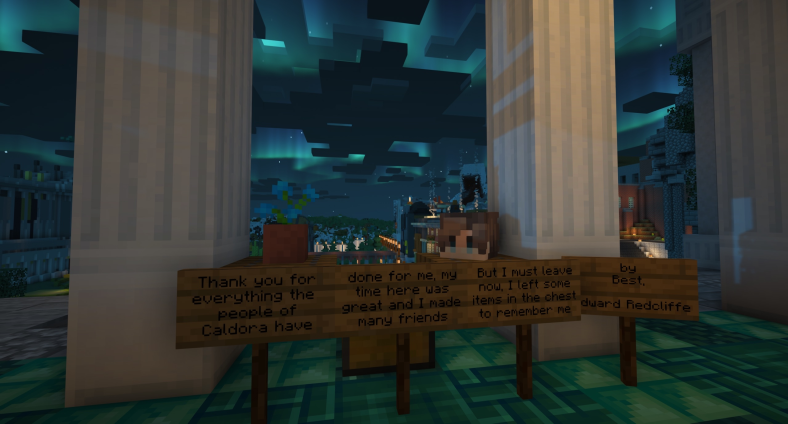
He was mourned across New Terranova and Old Yotem and the wider Ehrengard Empire. The Umbral Communion held a public service for him at the Vesperine Temple at sunset on the seventh day after his death.
Discussion
1. The Composed Final Period
The week before Edward’s death was the calmest week his staff had logged in many months. The address in New Terranova was warm and unhurried. The evening on the Vesperine patio was gentle. The walk back to his quarters was at the pace of a man who had nowhere urgent to be. People who saw him in those days reported, almost without exception, that he seemed better than he had in some time.
This is the part of late-stage suicide planning that is most often misread, both during the period itself and in the reconstruction that follows. A composed and graceful affect, arriving after a longer stretch of quiet withdrawal, is not evidence that the person has recovered. It is, in a substantial fraction of cases, evidence that the person has stopped fighting the thing they had been fighting. The calm is the calm of a decision already made. The decision narrows the field of possible futures to one, and the narrowing produces a peace that is real, that the person feels, and that the people around them often feel coming off them as well. The peace is not improvement. It is the absence of the conflict that improvement requires.
The same pattern appears across the surviving clinical and biographical record. A person who has spent months unable to sleep begins sleeping. A person who has been short and clipped in their letters writes one or two of unusual warmth. A person whose public appearances had grown few delivers a long and graceful address. To the observers, the change reads as the corner being turned. To the person inside the change, the corner has been turned, in a direction the observers have not been told about.
What this means in practice is that a sudden improvement after a long low period is the single most dangerous interval for a person carrying a planned death. The week Edward seemed best was the week he was closest to it. The people around him were not failing to see something obvious, rather they were seeing a thing whose meaning depended entirely on context they had no way to assemble in real time.
2. The Generosity That Was Closing Accounts
The transfers of the Red Corporation to Vetis read, to almost everyone who saw them, as the careful succession of an aging proprietor preparing to retire from commercial life. The small gifts to friends read as warmth. The settlement of debts no one had asked him to settle read as a tidying of personal affairs. The unprompted expression of pride to Vetis read as a mentor finally saying a thing he had not yet said. None of these acts, taken alone, would have alarmed a careful observer. The danger they pose is structural: they alarm only when assembled, and they are usually not assembled because they are distributed across recipients who do not compare notes.
The form of suicide planning that produces this pattern is the kind that takes months. The person doing the planning is not acting on impulse in the late period. They are clearing the ledger. They are making sure that the people they are about to leave behind have what they need to continue. They are making sure that those people, in particular, do not blame themselves for what is coming. The acts of generosity are, from inside the planning, acts of care. From outside they are not legible as warning. They are legible as kindness.
This is the form most resistant to intervention. The methodical preparation is the opposite of the impulsive presentation that most public-facing suicide-prevention messaging is shaped around. A person clearing the ledger does not look like a person in crisis. They look like a person at peace. They are at peace and that peace is the problem.
3. What Avery Reached For, And What She Could Not
The evening on the Vesperine patio was, by every account that survives, exactly the right thing to have done. Avery had noticed the slow change in him through their correspondence. She had asked to see him before he returned south. She had sat close enough to feel him breathing. She had named the things she had noticed: the shortened letters, the visits not made, the quiet that had taken the place of his old humor. She had told him the work he had built would keep without him. She had held his hand for most of the conversation. She had embraced him longer than the occasion warranted. She had not pretended she had come for the sunset.
She did not change the outcome. This is the part of the record that the people who loved her most have spent the longest sitting with, and that the wider Lilarisi tradition has not produced a decent way to discuss. The actions she took that evening were the actions both clinical and survivor literatures name as the correct ones. They are the same actions this article will recommend in its closing callout. In Edward’s case they were not enough.
That they were not enough does not mean they were wrong. The version of the evening in which Avery did not come, did not sit close, did not say what she said, would not have changed the outcome either, and would have left her without the memory of having reached for him in the last hours she had. The reach was correct, the reach failed, and both are true.
What this article cannot tell the reader who is presently reaching for someone they love is that reaching will work. What it can tell them is that not reaching is not an alternative whose outcome is better. Avery’s evening did not save Edward. It did, by the explicit testimony of the note he left, give him a final image of being loved by name. That image was not a substitute for the intervention she could not perform. It was the only thing left she could give him, and she gave it.
The wider point is that intervention in this form of late-stage planning is, in many cases, not within the power of the people who love the person. Those people are often the last barrier between the person and the plan. The barrier is not always strong enough to hold. A barrier being insufficient is not the same thing as a barrier being absent. Avery did not fail Edward by being unable to stop him. The conditions that produced the planning had been laid down for years before the evening on the patio, by Edward and by the structural arrangements his life sat inside. One evening was never going to undo all of them. What it did do was something else, and that something else was not nothing.
4. The Hour He Chose
Edward died at 2:14 in the morning. The note named the hour and named its meaning: it was the hour at which he had been sworn in as Count of Everstead decades earlier. The choice was deliberate. It belongs to the category the clinical record sometimes calls symbolic timing, and it is one of the most consistent features of the late-stage planning the preceding sections have been describing.
Symbolic timing is, in the cases it appears in, evidence that the person has been thinking about the death long enough to have chosen not just the act but the framing of the act. They have selected an hour, a date, or a location that carries a meaning forward. The meaning is sometimes addressed to the people the person is leaving behind. It is more often, in the surviving notes, addressed to the person themselves. Edward did not need the rest of the world to know the hour was the hour of his swearing-in. He needed himself to know it. The death was the closing of a service that, in his own internal accounting, had begun at exactly that hour.
The framing is in some sense merciful to the person planning it. It gives the death the shape of a completion rather than the shape of a defeat. The person experiences their own death, in the period they are arranging it, as a thing they are bringing to a close in the way they want it brought to a close. The framing is also, in retrospect, one of the clearer indicators that the planning has reached its late stage. A person who has chosen a meaningful hour has been carrying the decision for longer than the people around them know.
Not every death with a chosen hour is a planned one, and not every death without one is impulsive. But in the records the literature has access to, the presence of a chosen and meaningful hour correlates strongly with months-long advance planning. Edward’s hour, and the meaning he gave it, place his death inside that category. He had been carrying it for a long time.
5. The Letter And What It Could Not Do
The note Edward left is, by the standards of suicide notes, unusually structured. It identifies the hour and its meaning. It asks his friends not to read his death as their failure. It names Avery specifically and asks her to forgive both him and herself. It thanks the people of New Terranova and Old Yotem. It assigns his personal effects to Veltic. It assigns his correspondence to Avery. It refers to the estate transfers already handed to Vetis as the complete settlement of his commercial affairs.
The structure is the structure of a person who has been drafting the letter for as long as he had been planning the death. Each line does a specific job. Each recipient is named. Each anticipated form of grief is addressed in advance. The note was written so that the people receiving it would not be left to guess what he had wanted them to know.
What the note does for the person writing it is, in part, what the methodical generosity of the preceding months had done: it lets the writer experience the death as a thing they have arranged on behalf of the people they are leaving. The arrangement is real. The people receiving it are real. But the work the arrangement does for the writer is internal. The writer, in the late period, is often unable to imagine that the people they are leaving will be alright without an explicit instruction. The note is the instruction. The instruction is, from inside the planning, an act of care.
What a note like this does and does not do for the people who receive it is its own ethical territory. It does name them. It does ask them not to carry blame. It does, on rare occasions, succeed at preventing the worst of the self-blame from being carried. It does not, in any of the cases the record has access to, succeed at preventing the loss. The note is a gift the writer leaves. It is not a substitute for the writer.
Edward’s particular request, that Avery forgive both him and herself, is the line the Vesperine Temple has continued to read aloud at the annual service. It is also the line Avery, in her later writing, found hardest to accept. The asking is real. The capacity of the asker to deliver the forgiveness on the recipient’s behalf is not. She would, by her own account, spend the rest of her life only partially complying with his request.
6. What This Was, By Name
The closest name in current clinical language for what Edward was carrying, in the years preceding his death, is Major Depressive Disorder in its chronic and concealed form. The specific late-stage planning the preceding sections have described falls under the category of suicidal ideation with intent and plan, the most acute of the conditions the depression literature names. Both names are imprecise instruments and neither was available to Edward in any form that would have helped him. The Ehrengard Empire’s medical apparatus had categories for melancholia, for nervous prostration, and for what its physicians called the noble’s weariness. None of these categories described what Edward was actually living through with the precision the modern literature would have offered.
The naming matters for two reasons that recur across the wiki’s articles on this kind of material. The first is that a name that fits gives the person carrying the condition a route into the literature and the professional support that exists for it. The second is that it locates the experience inside a recognized medical category, rather than inside the private suspicion that the person is uniquely defective. Both functions of the name were, for Edward, unavailable. The name modern readers would now apply to his condition did not exist in his time, and the names that did exist were not specific enough to help him understand what to do with what he was carrying.
For the reader who does have access to the names, the recommendation is the recommendation the clinical literature also makes: that the recognition of these patterns in oneself or in someone one loves is the beginning of a response, not the end of one. The name does not contain the treatment. It contains the address of the treatment, and navigating to that address is the next step.
In hindsight: signs that may precede a planned suicide
The signs Edward showed in his last year were quiet, individually unremarkable, and visible only when assembled together after the fact. The recurring signs are:
- Steady withdrawal from social and public life across the final months.
- Methodical disposal of holdings, debts, and personal effects, in arrangements that read at the time as simple succession or housekeeping.
- A late and uncharacteristic warmth in private conversation, including unprompted expressions of pride, gratitude, or affection that feel out of step with the person’s usual reserve.
- Long embraces and lingering farewells in goodbye contexts that did not call for them.
- A composed and graceful affect after a longer period of quietening. A sudden calm following a long low period is itself a sign.
If you recognize these in someone you love, the most useful response is the one Avery tried that evening on the patio: name what you have noticed, ask without demanding an answer, remain present even when no answer comes, and continue to reach. Edward was loved by people who reached for him. He was not reached in time. The record stands as it does so that someone else might be.
Crisis support (US and Canada)
- 988 Suicide and Crisis Lifeline: call or text 988 (US and Canada). 24/7 crisis support; can connect callers to local crisis services.
- Crisis Text Line: text HOME to 741741 (US and Canada). 24/7 text-based crisis support, useful when a phone call feels too vulnerable to make.
- The Trevor Project: 1-866-488-7386, text START to 678-678, or chat at thetrevorproject.org. Crisis support for LGBTQ+ young people, staffed 24/7.
- Trans Lifeline: 1-877-565-8860 (US), 1-877-330-6366 (Canada), translifeline.org. Peer-run by trans people, for trans people. Its standing policy is no non-consensual contact with emergency services.
- LGBT National Help Center: 1-888-843-4564, lgbthotline.org. Peer support across age groups.
- American Foundation for Suicide Prevention (AFSP): afsp.org. Resources for those at risk, and for survivors of suicide loss.
For readers outside the US and Canada, the International Association for Suicide Prevention maintains a directory of crisis centers worldwide at iasp.info/suicidalthoughts.